Monday, March 9, 2020

Science Investigation: Wood and Water

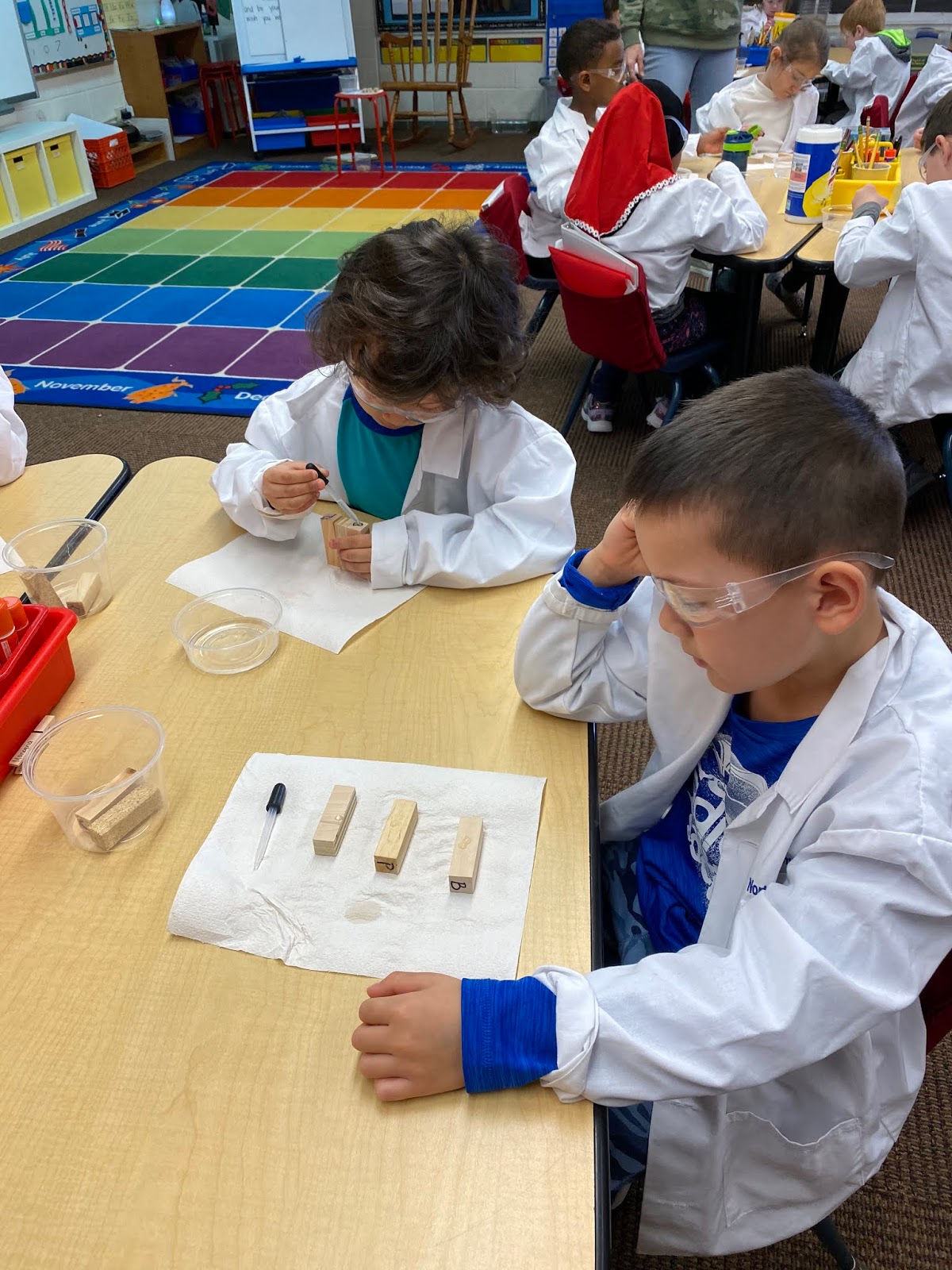
Well, if we are going to act and write like scientists, we need to look like scientists!  We pulled out the white lab coats and safety glasses to get ready for our investigation on wood and water.


Once we were dressed and ready, we were introduced to a new science tool.  This tool was an eye dropper.  Many of us had seen eye droppers before, but not many of us knew how to use them.  We talked about the parts of the eye dropper and spent some time practicing using them.


Our next job was to put some drops of water on samples of cedar and particleboard, using the eye dropper.  Then we had to observe to see what would happen.  Observing is sometimes the tricky part because you need to be very patient,  you need to wait and watch!


After that, we added water to the samples of basswood, pine and plywood.  Again...patience!


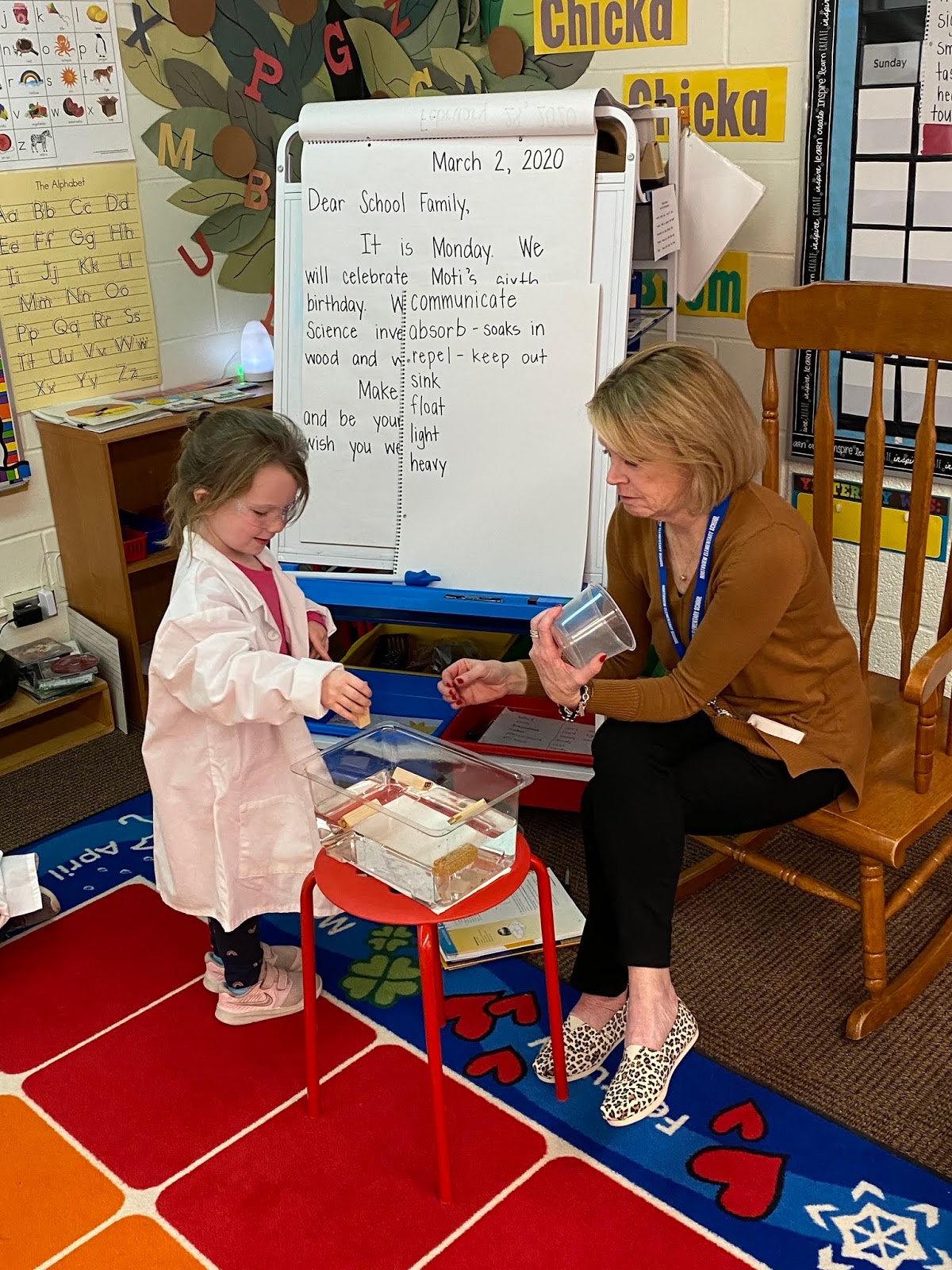
It was interesting to see which of the wood samples soaked in (absorbed) the water and which ones did not soak it in (repelled).  The final part of the investigation was to see if any or all of the wood samples would sink if we put them in a tub off water.  We predicted that the samples would sink because wood is heavy.   


We were surprised to discover that initially, none of the five samples sank to the bottom of the tub of water.  Within a few hours, the particleboard sample did sink to the bottom.  However, even after leaving the samples sitting in the water overnight, the basswood, cedar, pine and plywood did not sink!




Monday, March 2, 2020

The Three Little Pigs Houses

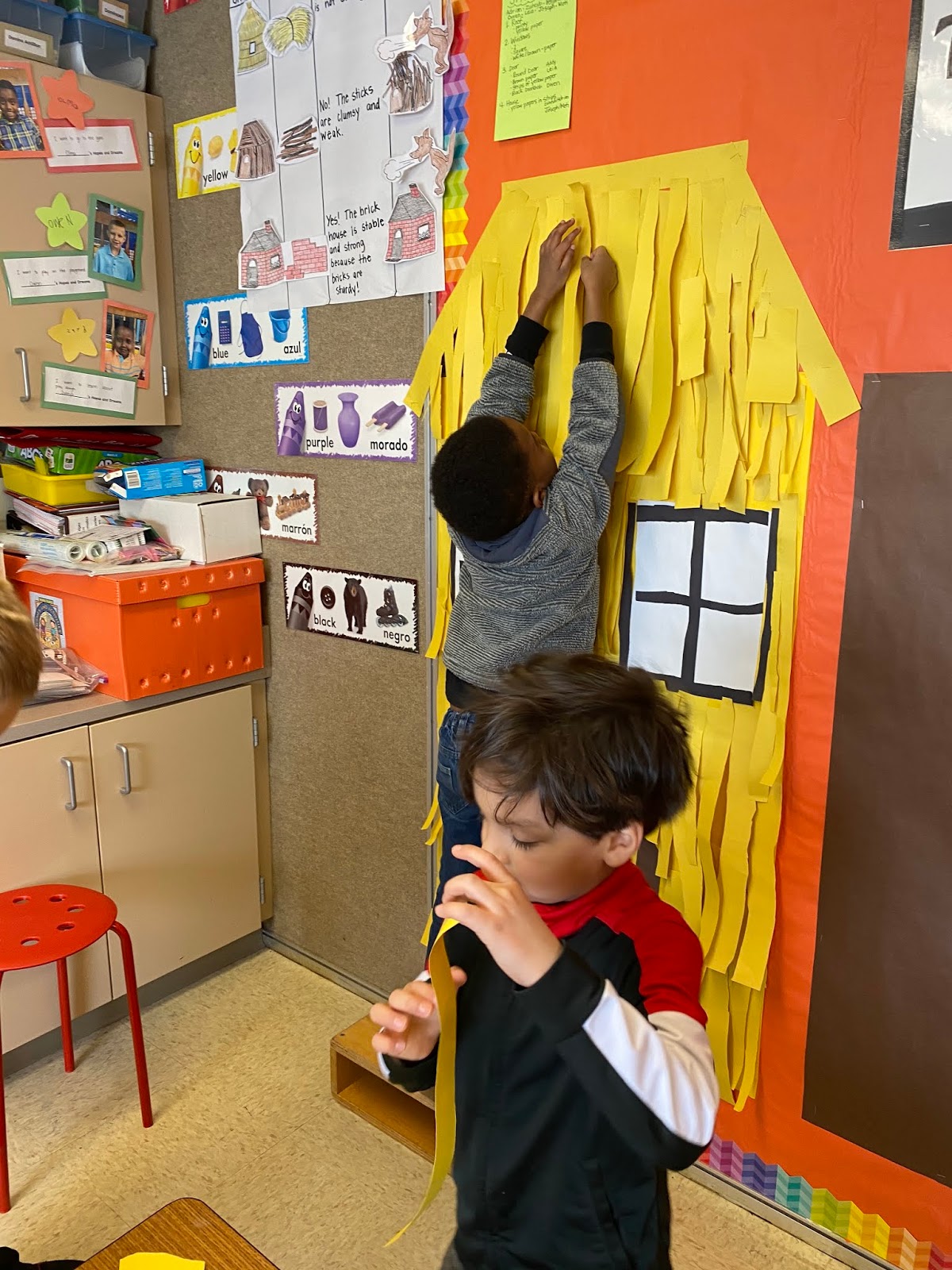
I could not be more proud of these students and how they worked together to complete these beautiful houses for our dramatic play area.  Many thanks to Mrs. Radermacher for her help with this project, too.  We are excited to play with them very soon!


Construction Collaboration

After reading several versions of the story The Three Little Pigs, the kindergartners set out to create each of the three houses.  These houses will be used as a set for our dramatic play area in Managed Independent Learning so kids can act our the story of The Three Little Pigs.  Under the supervision of our project manager Mrs. Radermacher, the students worked in collaborative groups to create each house.  Each house had two groups of four students working on it and every student in the class contributed to this activity in some important way!


I cannot believe how hared all the students worked on these houses.  They worked together so well, too.  I am so proud of them and their creations!


Materials In Our World


We recently started a new unit of study...Materials In Our World.  Materials are the things used to make objects.  We have learned that some materials are natural, meaning they come from a plant, animal or the ground.  Others are synthetic, meaning they are made from oil by people.  We launched the unit by reading a version of The Three Little Pigs.  After we read the story, we created an anchor chart about the story.


Next, we spent some time observing five different types of wood samples.  We observed samples of basswood (which comes from a linden tree), cedar (which comes from a cedar tree), pine (which comes from a pine tree), particle board and plywood.  


We started out gathering on the rug and distributing safety glasses and the wood samples.  Once we had all the samples, we went to our tables to observe.  Observe means to look closely at the samples.  While observing, we used the sense of sight, smell and touch.